
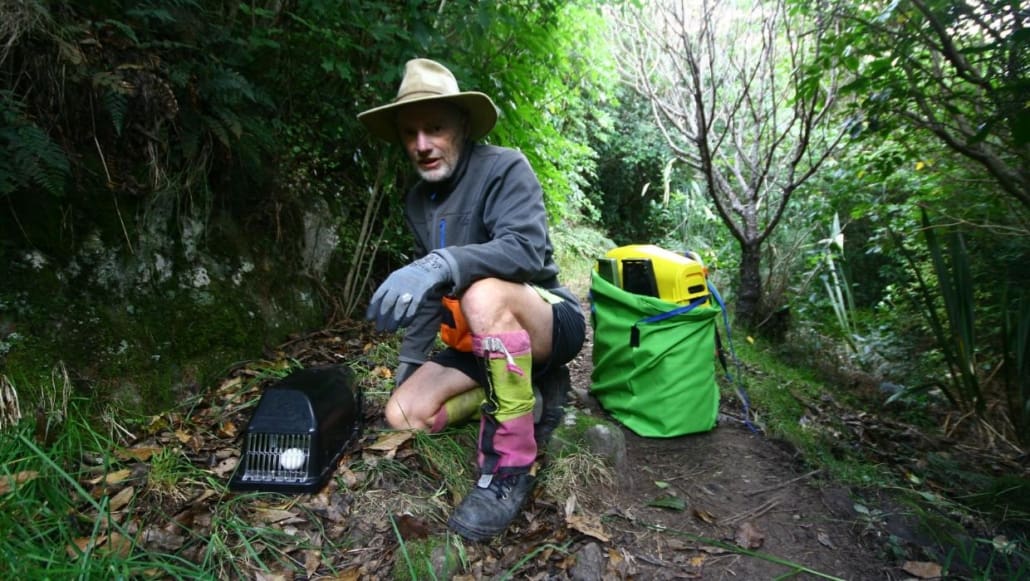
Canterbury-made pest traps shipped to Scotland
At Action Plastics, we’re proud to manufacture innovative plastic products that solve real-world challenges. One of those products is the Nestgard lightweight predator trap box, developed by engineer Marcus King in partnership with Trap Tools and manufactured right here in Christchurch.
Designed to make predator control safer, faster and more efficient in some of New Zealand’s most challenging environments, the Nestgard trap box is already helping conservation projects both here in New Zealand and overseas.
The following article, originally published in The Press, highlights the development of the Nestgard trap box, its role in supporting conservation efforts, and how locally manufactured innovation from Christchurch is making a difference around the world.
Canterbury-made pest traps shipped to Scotland
A Christchurch engineer says a lightweight plastic pest trap box could dramatically reduce the time and cost of predator control work in remote backcountry, with 500 already shipped to a major conservation project in Scotland.
Marcus King developed the plastic trap box after years of hauling heavy wooden trap boxes through steep South Island terrain while helping protect kākāriki karaka (orange-fronted parakeets) near Arthur’s Pass.
Traditional wooden trap boxes fitted with Department of Conservation (DOC) steel traps can weigh about 17kg, meaning King could usually only carry two at a time.
The new plastic Nestgard boxes weigh about 2.1kg each including a DOC 150 steel trap.
King recently tested the new boxes while laying trap lines south of Lewis Pass with his wife Irene Pow.
The pair carried up to 10 traps each while travelling from Nina Hut over Devilskin Saddle and down to the Doubtful River – a route involving about 700m of climbing on either side. The work was completed in two long days.
King estimated the same job using larger wooden trap boxes could have taken about 10 days and required helicopter support.
“Using my engineering skills was possibly the most valuable thing I could do for conservation,” he said.
“I know all about building these sort of things.”
King previously worked developing products at Callaghan Innovation and its predecessor organisations.
Funded through philanthropic support, he first developed a lighter plywood prototype before switching to plastic to further reduce the weight.
The final design also includes several modifications aimed at improving trapping efficiency. The entrance is sized for rats and stoats, while adult hedgehogs are too large to fit unless the opening is enlarged with a hacksaw.
As Trap Tools was finalising the design, the Orkney Native Wildlife Project in Scotland approached the company seeking 500 trap boxes for its stoat eradication programme.
Stoats are devastating native bird populations in Orkney, with the project aiming to make the islands stoat-free by 2030.
Some of the boxes shipped to Scotland are bright yellow after a DOC study found stoats were more likely to enter brightly coloured trap boxes than duller ones. The colour also makes traps easier to locate in the landscape.
About 200 of the trap boxes have so far been deployed in New Zealand since going on sale near Christmas, King said.
The boxes cost about $50 each, plus about the same again for a DOC 150 trap, and are manufactured in Christchurch.
Article written by Will Harvie
Image – Marcus King lays a NestGard plastic trap. Photo supplied by Trap Tools